International Conference Moderation Training: From Conference Host to Professional Moderator
International Conference Moderation Training:
From Conference Host to Professional Moderator
Moderating an international conference involves much more than managing the programme, introducing speakers and keeping to time. AMA’s Moderation for Conferences is a practical training programme co-developed by international moderation and meeting design experts, helping professionals develop their judgement, guide meaningful conversations and respond confidently to live situations.
Having Moderated Conferences Does Not Mean You Have Mastered Moderation
You may have chaired academic sessions, moderated international conferences or hosted corporate events. You know how to introduce speakers, manage time, prepare questions and remain composed when unexpected situations arise. But when you are on stage with experts from different backgrounds, panellists holding contrasting views and an audience looking for meaningful exchange, can you turn the discussion into something that genuinely creates value?
This is where the role of an MC differs from that of a professional conference or panel Moderator.
An MC's primary responsibility is usually to ensure that an event runs smoothly. A Moderator, however, takes responsibility for the conversation itself. The role goes beyond connecting speakers and sessions; it also shapes the direction of the discussion, the quality of interaction and the level of audience engagement.
Professional moderation is not simply about completing the programme. It is about taking a conversation somewhere meaningful.
Moderation Is a Profession, Not Just a Set of Hosting Skills
A good panel discussion is not a series of experts taking turns to speak. Nor is it simply a matter of preparing questions and asking each panellist to respond in turn.
A professional Moderator needs to understand the purpose of the session, the relationships between speakers, what the audience really wants to explore and where the conversation might lead. This judgement begins well before stepping onto the stage, through thoughtful preparation and meeting design.
International moderation expert Jan-Jaap in der Maur has long advocated that a Moderator should not simply follow a script and manage the running order. Moderation requires thoughtful design, as well as the judgement and flexibility to respond to what happens in the room.
This professional perspective is also a key source of inspiration for the core architecture of AMA's Moderation for Conferences. The course was co-developed by AMA and Jan-Jaap, bringing together professional moderation principles and practical training in a structured learning experience.
We do not reduce professional moderation to a handful of techniques that can simply be memorised. Real capability develops through structured learning, practical exercises and professional feedback.
Moving from Moderating Experience to Professional Judgement
Experienced moderators usually know how to open a session, introduce speakers, manage time and handle awkward silences. The next step is to develop a more sophisticated level of professional judgement:
- Moderation Design: Understanding how moderation connects with the design of the wider meeting.
- Questioning & Interviewing: Developing the ability to ask more insightful questions and conduct meaningful interviews.
- Listening & Interaction: Recognising the messages, dynamics and relationships within a conversation.
- Flexibility & Judgement: Making appropriate professional decisions as situations evolve.
- Personal Style: Developing an authentic, credible and distinctive moderation style.
These are not five separate techniques that can simply be learnt in isolation and put together. They are interconnected capabilities that collectively shape the professionalism of a Moderator.
Learning how to apply them across different conference formats, cultural backgrounds and audience expectations requires practical experience and professional guidance.
Who Should Attend Professional Conference Moderation Training?
Moderation for Conferences is designed for people who want to strengthen their professional moderation capabilities and take on international or high-level conference assignments, including:
- Professors, researchers and subject-matter experts who regularly chair international conferences and academic sessions
- Senior executives, consultants and industry leaders
- Event hosts and moderators with existing experience who want to take their skills further
- Professionals who need to guide cross-disciplinary and cross-cultural conversations
- Those looking to progress from event hosting or MC work into professional conference moderation
Whether you are relatively new to conference moderation or already have years of experience, this course offers an opportunity to rethink the professional role and potential of a Moderator.
AMA Moderation for Conferences | Professional Conference Moderation Training
Moderation for Conferences is the first all-English professional moderation training programme of its kind launched by Art of Meetings Academy (AMA) in Asia.
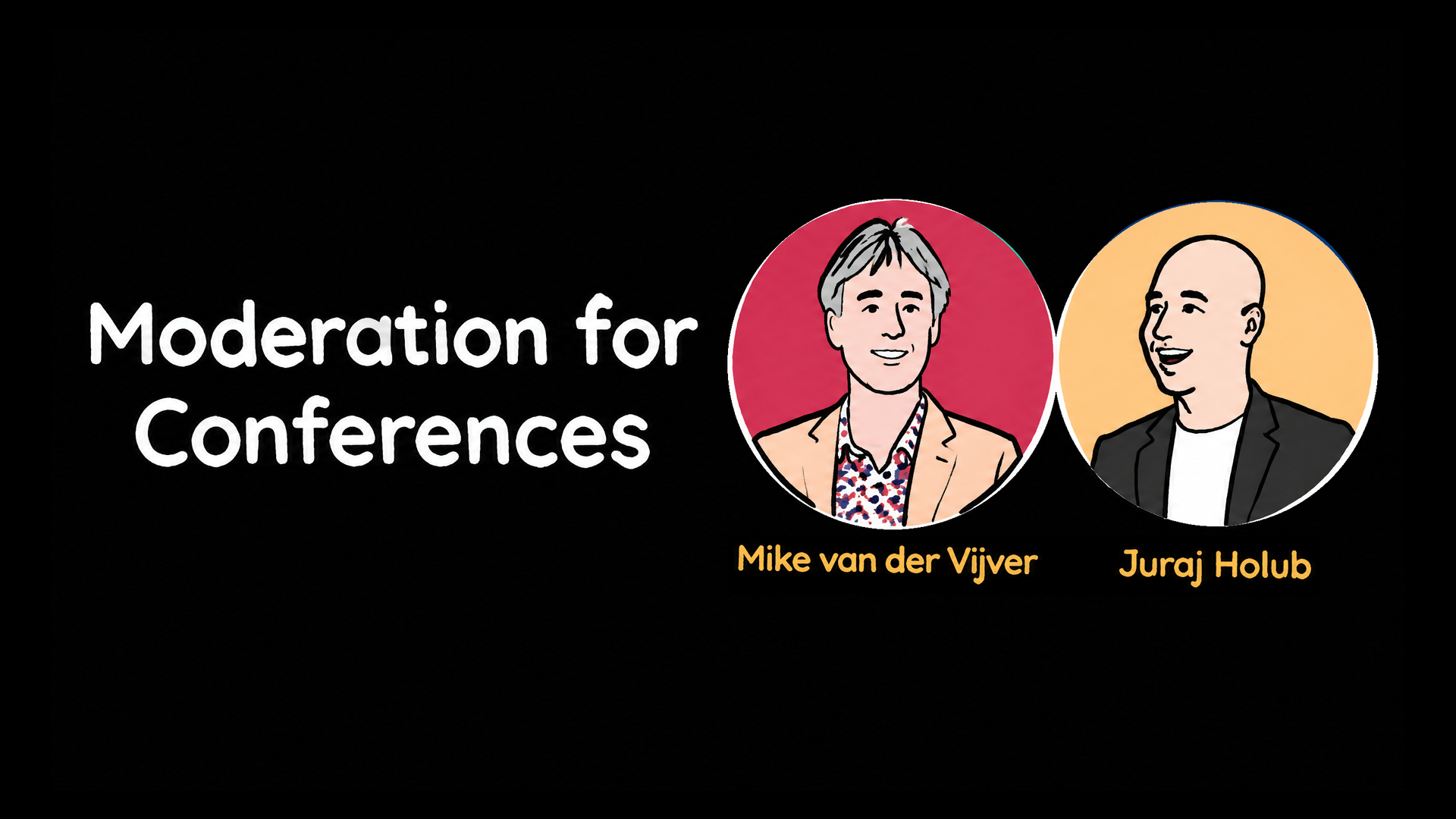
The core course architecture was co-developed by AMA's Mike van der Vijver and international moderation expert Jan-Jaap in der Maur. The programme is guided by two professionals with extensive international experience:
- Mike van der Vijver: International Meeting Designer, Moderator, Facilitator and intercultural coach, with more than 25 years of experience in international meetings and events. He is also a co-founder of Orange Gibbon.
- Juraj Holub: International Moderator, Meeting Designer and Facilitator, and former Chief Meeting Designer at Slido.
The course combines professional methodology, practical exercises and expert feedback. Participants will have the opportunity not only to understand the professional demands of moderation, but also to reflect on their own practice and develop their capabilities for the next stage.
Jan-Jaap once offered an interesting perspective in an interview:
“The script is no longer the Bible, it's just a suggestion.”
An agenda is a guide, not a sacred text.
Many moderators spend a great deal of time preparing their next question, but forget to listen carefully to the answer they have just received.
Jan-Jaap emphasises that a good interview is not simply about following a list of prepared questions. It is about recognising what is worth exploring further in what a speaker has actually said.
Good moderators manage conversations. Great moderators move them forward.
Ready to become one of Asia's first professionally trained conference moderators? Only a limited number of places remain for AMA's Moderation for Conferences.