
The Founding Story of Art of Meetings Academy
The Founding Story of Art of Meetings Academy
Han Chiang & Mike van der Vijver
#About AMA
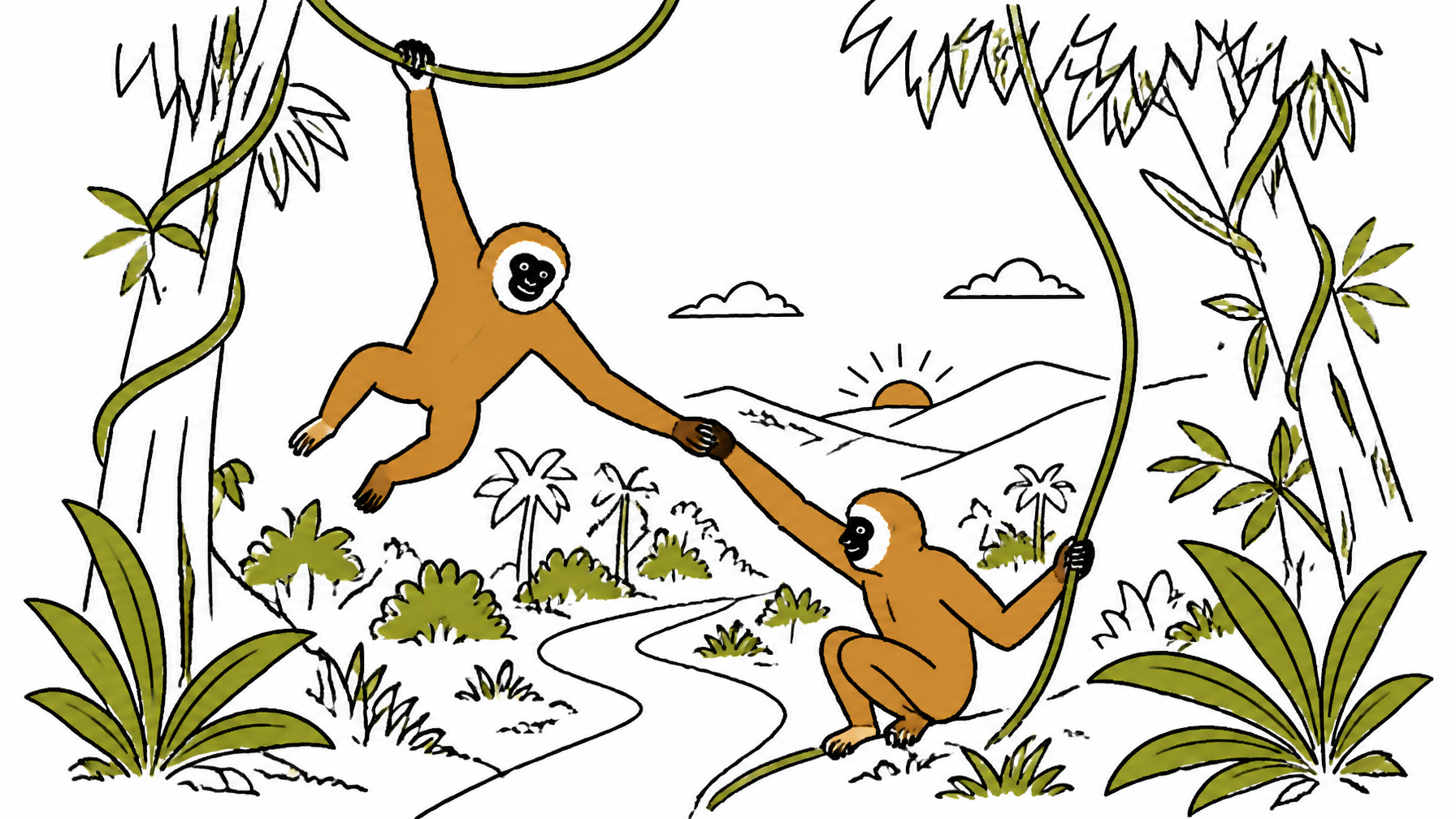
1. Who is Art of Meetings Academy (AMA), and what kind of meeting jungle are you hoping to grow?
The question should be: How do you intend to grow your students who are now in the meeting jungle?
The Art of Meetings Academy (AMA) is a venture set up by Orange Gibbon, for two purposes: Offer training courses to all those who are involved in organising and/or running meetings and who like to have better meetings, and secondly, to have a platform where these people can exchange any kind of information related to meetings.
AMA is not growing a jungle; it offers guidance to people who are IN the meeting jungle and who are lost.
The answer to the changed question is: AMA’s training courses offer students a wide variety of insights, skills and attitudes that will help them to navigate the meeting jungle more effectively.
2. What first made you look at meetings and think, “There has to be a better way”?
Many people in meetings are disengaged: they play with their phones, are dozing off or they walk out. This is a great waste of people’s time and energy. To some extent, it is even disrespectful… Over the past 25 years, we have developed better ways to meet and to engage participants.
3. What personally led you into the world of meeting design and facilitation?
Han: Many meetings and events give people empty “WOW” moments – moments that are void of heart and soul. When I experienced a well-designed session in 2014, I got interested in a different way of having meetings. Reading “Into the Heart of Meetings” showed me that Meeting Design offers many opportunities to give people meaningful experiences: meetings with heart and soul, that are #SeriousFun!
4. When you picture a meeting at its best, what is happening in the room?
Buzz! Energy! Laughter! Exchanges about content! Connections with people’s real lives! And no one really worries about food, drinks or phones because they have more important things to engage with.
5. Why did you shape the Academy around four learning trees?
Meetings are a complex form of communication. In order to get them right, a variety of skill sets needs to be deployed for different purposes and in different environments. AMA structures its courses around those different skill sets and contexts.
The learning trees reflect our 25 years of experience, during which we have applied our methodology for the benefit of clients all over the world. When we started, Meeting Design did not exist, and it was not a profession. It has become that over many years. During that time, we have refined our working methods, tools and techniques, resulting in AMA’s current set-up.
6. What can people expect from your courses, and how does the training help them solve real meeting problems?
Our courses are practical, simply because our way of working has matured in actual meetings. Course participants, in fact, PRACTICE! They get lots of exercises and feedback on how they work with their fellow participants. This creates a steep learning curve and many moments that spill over directly into participants’ work environment.
7. Many people may think they can fix meeting problems on their own. What makes meeting design and facilitation worth learning properly?
If they think they can fix the problems by themselves, why do they still have the problem? The fact of the matter is that there are a lot of default behaviours and expectations for meetings. To improve meetings, a well-structured methodology, with new perspectives, fresh insights and new words is essential. And those perspectives need to be practised. That is the only way to break through the default.
8. If someone feels called to make meetings better, where would you recommend they begin?
Take any one of our training and then: DO IT! Have the courage to break the mould and start doing things differently – doing them right. And then come back for more!
There are two additional answers: one is to interact with peers and benefit from their experiences. AMA offers a platform for such exchanges.
The other answer is that in the long run, the meeting culture in people’s organisations needs to change in order to eliminate the waste of poor meetings. That is a much more complicated process, involving training programmes which embed effective behaviours in large parts of the organisation. Typically, this requires a strategic commitment from the top of the organisation, with a sound implementation plan. AMA offers consultancy, execution, and tools for that type of deep change process, as well.